The Ground Beef Got Eliminated by Equali
How do y'all know how much meat to buy when yous go to the grocery store or purchase from a local farmer? In that location are two main ways that meat is sold: hanging weight and cut weight.
Hanging weight is the weight of the meat after it has been slaughtered, and all of the unusable parts accept been removed. Cut weight is the weight of the meat afterwards it has been trimmed, packaged, and labeled.
And then, of class, at that place is live weight – which is the weight of the fauna before it has been slaughtered.
And then, which should y'all buy? In this blog mail, nosotros'll discuss the pros and cons of each method and assist y'all determine which is best for you.
What is Live Weight?
When buying meat, information technology is important to be aware of weight. Alive weight refers to the full weight of the animal before it has been slaughtered and processed.
This number can tell y'all a lot near the quality of the meat you are purchasing, as well equally indicating how much meat you volition actually exist getting for your coin.
Generally speaking, animals with higher live weights tend to have more than marbling and higher amount of fat, which gives their meat a richer flavor and texture. Those at a lower weight might have less fatty or fewer bones.
Livestock that has lessened in size due to illness or stress may have inferior meat quality also, and then it is always important to pay close attention to this metric when choosing your side by side cutting of beefiness or pork.
Live weight is a term that's mostly used to draw cattle and pigs. The average live weight of a grunter is 250 to 325 lbs. With a cow, the average live weight is 1100 lbs which will get you lot 660 lbs hanging weight.
Whether you're looking for a premium steakhouse experience or simply want something tasty for dinner, live weight is key in determining the quality and quantity that you can expect from your purchase.
What is the Difference Between Hanging Weight and Cutting Weight?
The terms "hanging weight" and "cut weight" are often used to describe meat products, merely what practise these terms actually mean?
At first glance, they might appear to refer just to different amounts of meat, with the hanging weight being the total weight of a whole brute carcass and the cut weight being the portion that is later chopped up and sold in smaller cuts.
All the same, there is more than to these terms than meets the eye. In fact, they refer to two very different measures of meat quality.
Hanging weight refers to the full weight of an animal carcass after various processing steps have been performed.
These include a variety of slaughtering or butchering techniques that remove sure parts of the brute in lodge to provide specific cuts for sale. For example, the head, some organs, and the hide may take been removed.
Considering hanging weight can exist quite variable depending on how much meat remains after processing, this measure should not be used lonely when comparing the quality of dissimilar types or cuts of meat.
Going back to the numbers I referenced above, for a pig with a live weight of 250 to 325 lbs, you'll get nigh 70% of that in hanging weight – meaning 175 to 228 lbs.
Later that, you'll get about 75% of that in carcass weight, or about 130 to 194 lbs of meat to take domicile and put into your freezer space. For a moo-cow with the 1100 live creature weight and 660 lbs hanging specified above, you'll become well-nigh 396 lbs of packaged weight.
That last number does vary, though, because how you lot choose to have the animal cutting impacts how much meat you lot come up home with.
For instance, if y'all have more of your cuts made into boneless products, footing into sausage or footing beefiness, or cured, you'll but yield about 65% or 114 to 149 lbs of take-dwelling cuts. Fat trimming, os removal, and any additional processing volition event in less take abode- production.
Something else that impacts the hanging weight vs cutting weight, or take home weight, is how lean the animate being is. If an animal is overly fat, the hanging weight to packaged weight yield is lower considering more fat has to be trimmed off.
Why Do Farms Charge by Hanging Weight?
When you lot buy a whole or half grunter from a subcontract, y'all're usually charged past the hanging weight of the carcass, not the live harvest weight.
But why? Why not charge by cut weight or by alive weight when that's what'due south going into your cooler or what the farmer has to get-go with?
Hanging weight is the weight of the carcass later it'south been butchered and cleaned, but before it's been cut into individual pork chops and bacon strips. It's an important number for farmers, because information technology helps them to determine how much meat they'll be able to sell from each hog.
In that location are a few reasons why farms charge by hanging weight rather than past the concluding weight of the meat. For one thing, it's more accurate.
Because fat is trimmed off before the meat is packaged, the final weight can vary quite a bit, fifty-fifty for hogs of the same size. Hanging weight, on the other hand, provides a more consistent measurement.
Another reason that farms adopt to charge by hanging weight is that it allows them to laissez passer on some of the processing costs to customers.
These costs can add up, peculiarly if the farm uses a custom butcher. By charging by hanging weight, farmers can ensure that they're getting compensated for their efforts.
In most cases, it doesn't make sense for farms to charge by the live weight unless you, the customer, volition exist taking care of the fauna processing and related fees. You'll exist paying a lot more of the variables that are harder to control.
Other Things To Know
When you have your pig or cow cut up, the butcher will ask if you have whatever special cutting instructions or customers asking other options as well the basic retail cuts.
You can identify whether you lot desire to have sure parts of the animal processed into things like roasts, chops, steaks, grind, etc.
Yous can frequently specify the portions per packet and the ideal thickness, too, then it's of import to take your family's p[references into consideration. That Way, you lot can go the about "blindside for your cadet" when buying meat.
Go on in mind that many states have regulations in which customers are charged by the live weight of an fauna and the hanging weight – not the boxed weight.
That can be confusing and disappointing,simply it doesn't hateful that yous are existence scammed. It'southward simply the way things must be done, in some places.
Always ask the farm or producer you're buying from virtually how they accuse their prices. Most will be very upfront about this. Remember that virtually slaughterhouses charge extra for additional processing (things like extra sausage and such).
Hanging Weight vs. Cut Weight: My Experience
We bought a quarter of a moo-cow today from the farmer up the route. It ended up beingness a lot less meat than we'd expected though; about 97 lbs.
If you're similar u.s., that just doesn't audio correct does it? A beef brute weighs like 800 lbs or something, how could a quarter of it only be 97 lbs?
Well, it'due south because of the hanging weight vs. cutting weight issue, which nosotros didn't actually sympathise before nosotros fabricated our purchase, and so we ended upward paying more than nosotros'd expected per pound.
This ways that when you summate the stop result with the toll per pound that you paid, information technology will end upwards being much more per pound.
In our case, the farmer charged u.s.a. $2/lb hanging weight, which ended upwards totaling $382 (thank goodness for a tax refund!).
Merely when nosotros calculated how many pounds of meat we actually brought dwelling information technology ended up existence most $3.xc/lb.
It was definitely a practiced deal for locally raised, grass-fed whole beef, but even so much more than than we'd expected to pay. We had really planned on splitting the meat (and the cost) with some friends. But what we have isn't plenty to share.
Honestly, I can't complain though. I've looked around, and the average toll I've found for grass fed beef ranges from $3-$4/lb hanging weight, so you lot'd end upwards paying well-nigh double that for the cut meat.
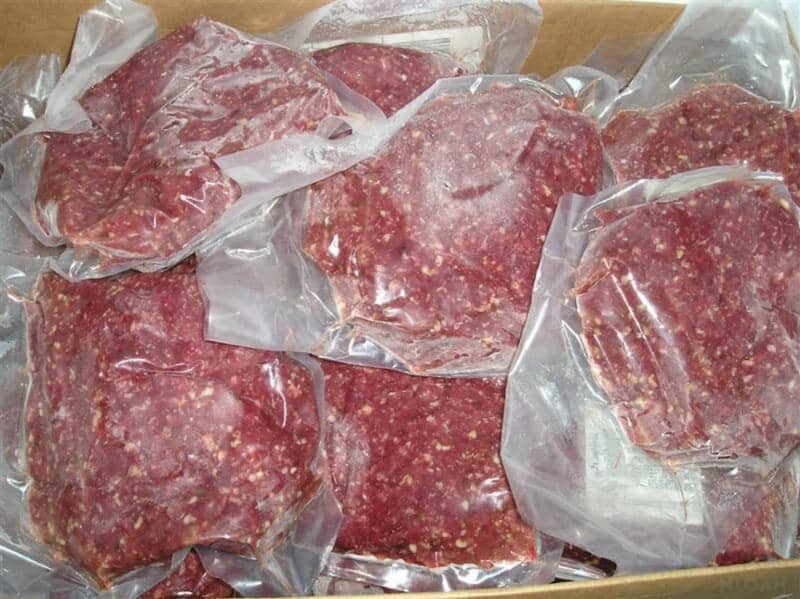
Plus, this includes pot roast, round roast, london broil, chuck roast, sirloin steaks, sirloin tip roast, ribeye steaks, t-bone steaks, and curt ribs. Not to mention tons of ground carcass beefiness, and some soup basic.
So, nosotros are still pleased with our investment. But it's good to know what to wait next fourth dimension we programme on ownership beef in bulk like this. And hopefully this lesson has been helpful to some of y'all equally well.
Estimating How Much Meat to Buy For Your Family
When it comes to estimating how much meat to buy for your family, in that location are a few factors to consider.
Outset, think virtually how frequently y'all eat meat meals and how many people will be eating. If you typically have two meatless dinners and one meat-based dinner per calendar week, and in that location are iv people in your household, yous'll need about 1.five pounds of meat per calendar week.
If you eat meat more frequently or have more people in your household, you'll obviously need to buy more. Another factor to consider is the type of meat y'all're buying.
Boneless, skinless craven breasts are more often than not smaller than bone-in chicken thighs, for case, so you'll demand to buy more craven breasts to equal the corporeality of craven thighs.
When in uncertainty, it's e'er amend to err on the side of buying also much meat rather than too little – y'all tin e'er freeze any extras for another fourth dimension. With a little planning, it's easy to make sure yous have just the right amount of meat for your family unit's needs.
How You Can Relieve Coin on Meat by Purchasing information technology in Bulk
When it comes to eating meat, many people call up that they have to cull between spending a lot of money or eating low-quality meat.
Nevertheless, there is a third option: buying meat in bulk. By purchasing meat in larger quantities, you tin can salvage money without sacrificing quality. Here are some tips for how to salvage coin on meat past purchasing information technology in bulk.
Look for sales. Many farmers will offer discounts on older animals or at the terminate of the season, when there's more product to offload.. This is a great way to become high-quality meat at a discounted price.
Join a CSA. Community Supported Agriculture programs allow you lot to purchase shares of meat from local farms. This can exist a great mode to go access to fresh, humanely raised meat at a reasonable toll.
Once more, buy whole animals. When you buy an entire brute, you tin often go a meaning discount. Plus, you'll have the added benefit of being able to use all parts of the animate being, rather than just the cuts that are typically sold in stores.
If you don't think you lot'll use the entire animal, consider going in on one with family unit and friends. Buying an unabridged cow or pig will yield you greater savings than fifty-fifty ownership a half pig or quarter beef share.
By following these tips, you can save money on meat without compromising on quality. So next fourth dimension you're at the grocery store, consider ownership in bulk!
The Takeaway
So, what have nosotros learned? When buying meat in majority, always go by the hanging weight. This will ensure you lot go the best price per pound and that you lot're getting as much meat every bit possible.
Accept yous tried this strategy before? What tips do yous have for fellow meat-buyers? Share your thoughts and experiences in the comments below!
Do you buy beef by the quarter or half a cow? I'd be interested in knowing what you pay per pound hanging weight!
Source: https://www.newlifeonahomestead.com/hanging-weight-vs-cut-weight/
0 Response to "The Ground Beef Got Eliminated by Equali"
Post a Comment